
How to Cut Production Costs by 30% in 6 Months
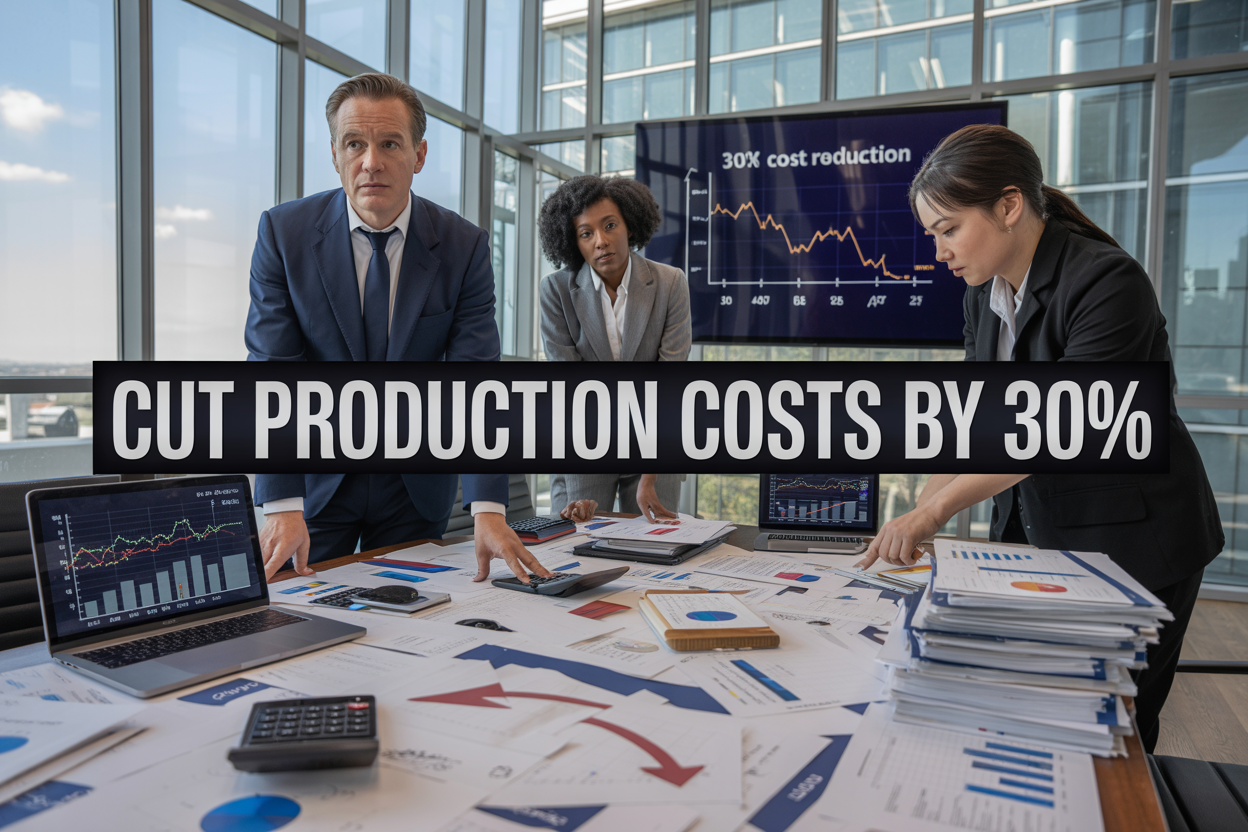
Manufacturing companies facing tight margins need aggressive yet achievable cost reduction strategies. This guide delivers proven methods to cut manufacturing expenses by 30% within six months through systematic analysis and targeted improvements.
The approach combines data-driven cost analysis with operational optimization, creating measurable results without compromising product quality. Business leaders, operations managers, and manufacturing executives will find actionable tactics that directly impact the bottom line.
This comprehensive plan covers identifying the biggest cost drains through detailed expense analysis, revealing hidden inefficiencies that drain profits monthly. The guide also explores proven supplier negotiation tactics that secure better pricing while maintaining quality standards. Finally, workforce optimization strategies show how to maximize productivity while reducing labor-related expenses, creating sustainable production cost reduction across all manufacturing operations.
The following sections provide step-by-step implementation frameworks, real-world case studies, and measurable benchmarks to track progress toward achieving significant manufacturing cost savings.
Identify Your Biggest Cost Drains Through Comprehensive Analysis

Conduct Detailed Cost Breakdowns by Department and Process
Breaking down costs requires diving deep into every corner of the operation. Start by examining each department's spending patterns, from raw materials and labor to overhead expenses. Manufacturing teams should separate direct costs like materials and machine operation from indirect expenses such as quality control and maintenance. Administrative departments need scrutiny too – office supplies, software licenses, and communication costs add up quickly.
Process-level analysis reveals where money disappears. Map the entire production flow and assign costs to each step. This granular approach exposes hidden expenses that department-level reviews miss. For example, excessive material handling between stations or redundant quality checks often go unnoticed in broader cost reviews.
Create detailed cost centers for accurate tracking. Break down manufacturing expenses into material costs, labor hours, machine utilization, energy consumption, and waste generation. Service departments should track costs per transaction or per unit of output delivered to production areas.
Track Wasteful Spending Patterns Using Data Analytics
Modern data analytics tools transform cost reduction strategies by revealing spending patterns invisible to traditional analysis. Financial systems generate vast amounts of transaction data that, when properly analyzed, highlight areas where money is being wasted.
Focus on identifying recurring expenses that don't add value. Software can flag unusual spending spikes, duplicate vendor payments, or purchases that bypass approved procurement channels. These tools also reveal seasonal patterns in costs, helping predict and prepare for expense fluctuations.
Machine learning algorithms detect subtle correlations between different cost categories. For instance, higher maintenance costs might correlate with specific suppliers or production schedules. Predictive analytics forecasts future cost trends based on historical data, enabling proactive cost management rather than reactive fixes.
| Analytics Focus Area | Key Metrics | Expected Insight |
|---|---|---|
| Vendor Spending | Payment frequency, volume discounts | Consolidation opportunities |
| Material Usage | Waste percentages, yield rates | Process efficiency gaps |
| Energy Consumption | Peak usage times, equipment efficiency | Optimization potential |
| Labor Productivity | Output per hour, overtime patterns | Workforce optimization needs |
Benchmark Against Industry Standards for Cost Efficiency
Industry benchmarking provides the context needed to evaluate cost performance objectively. Without external reference points, internal improvements might seem significant while still lagging behind competitors. Research industry reports, trade associations, and specialized consulting firms for relevant cost benchmarks.
Key performance indicators vary by industry but typically include cost per unit produced, labor cost as a percentage of total costs, material utilization rates, and energy consumption per unit. Manufacturing operations should compare their metrics against similar-sized companies in the same sector.
Benchmarking reveals competitive gaps and improvement opportunities. Companies discovering their labor costs exceed industry averages by 15% can prioritize workforce optimization. Those with higher material costs might focus on supplier negotiation tactics or waste reduction.
Don't limit comparisons to direct competitors. Cross-industry benchmarking sometimes reveals innovative approaches from unexpected sources. Automotive manufacturers have adopted lean principles from electronics companies, while food processors have borrowed efficiency techniques from pharmaceutical operations.
Map Value-Added Versus Non-Value-Added Activities
Value stream mapping distinguishes between activities customers pay for and those that drain resources without contributing to the final product. This analysis forms the foundation of effective production cost reduction strategies.
Value-added activities directly transform raw materials into finished products or improve quality in ways customers recognize. Non-value-added activities consume resources but don't enhance the product from the customer's perspective. Examples include excessive inventory storage, redundant inspections, unnecessary transportation, and waiting time between production steps.
Create detailed process maps showing every activity from raw material receipt to finished product shipment. Classify each step as value-added, non-value-added but necessary (like regulatory compliance), or pure waste. This visual representation makes improvement opportunities obvious.
Focus elimination efforts on pure waste first – these activities offer the quickest wins. Then optimize necessary non-value-added activities to reduce their cost impact. Finally, streamline manufacturing operations by improving value-added processes to increase throughput without proportional cost increases.
Time studies complement activity mapping by quantifying how long each step takes. Compare actual times against theoretical minimums to identify process inefficiencies. Workers often develop workarounds for system problems, creating hidden inefficiencies that formal procedures miss.
Streamline Operations by Eliminating Inefficiencies

Remove Redundant Processes and Duplicate Workflows
Manufacturing operations often accumulate unnecessary steps over time, creating layers of inefficiency that drain resources without adding value. Companies typically discover that multiple departments perform similar tasks independently, leading to wasted effort and inflated costs. A systematic review of current workflows reveals where these duplications occur and which processes no longer serve their original purpose.
Common areas where redundancy appears include:
-
Quality control checkpoints that overlap between departments
-
Multiple approval levels for routine decisions
-
Duplicate data entry across different systems
-
Parallel inventory tracking methods
-
Overlapping reporting requirements
The most effective approach involves mapping every step in the production process, identifying where work gets repeated, and consolidating these activities under a single ownership. This streamlined manufacturing operations strategy can reduce production costs by 8-15% within the first quarter of implementation.
Documentation plays a critical role in maintaining streamlined processes. Clear standard operating procedures prevent teams from reverting to old habits and ensure new employees follow optimized workflows from day one. Regular process audits help catch new inefficiencies before they become embedded in daily operations.
Automate Repetitive Manual Tasks to Reduce Labor Costs
Manual tasks that consume significant time and offer little strategic value represent prime opportunities for cost reduction through automation. These activities often involve data collection, basic calculations, routine communications, and simple decision-making processes that machines can handle more efficiently.
High-impact automation targets include:
| Task Category | Potential Savings | Implementation Time |
|---|---|---|
| Inventory management | 20-30% labor reduction | 2-3 months |
| Order processing | 40-50% faster completion | 1-2 months |
| Quality reporting | 60-70% time savings | 1 month |
| Scheduling updates | 35-45% efficiency gain | 2-4 weeks |
Simple automation solutions often provide the best return on investment. Basic software tools can handle invoice processing, purchase order generation, and production reporting without requiring complex integration. These production cost reduction strategies free up employees for higher-value activities that directly impact product quality and customer satisfaction.
The key to successful automation lies in starting small and scaling gradually. Companies that attempt to automate everything simultaneously often face resistance and implementation challenges. A phased approach allows teams to adapt to changes while demonstrating clear benefits before expanding to additional processes.
Optimize Production Schedules to Minimize Downtime
Unplanned downtime costs manufacturers an average of $50,000 per hour, making schedule optimization one of the most impactful ways to cut manufacturing expenses. Effective scheduling balances machine utilization, maintenance requirements, and demand fluctuations to create smooth, continuous operations.
Strategic scheduling improvements focus on:
-
Predictive maintenance windows: Schedule equipment servicing during natural production lulls rather than waiting for breakdowns
-
Batch optimization: Group similar products to reduce changeover time between different manufacturing runs
-
Cross-training workforce: Enable flexible staffing that adapts to varying production demands
-
Buffer management: Maintain strategic inventory levels that prevent production delays without tying up excessive capital
Advanced scheduling software provides real-time visibility into production capacity and potential bottlenecks. These systems automatically adjust schedules based on machine availability, raw material delivery times, and order priorities. The result is typically 15-25% better equipment utilization and significantly reduced emergency overtime costs.
Smart scheduling also considers energy costs, running high-consumption processes during off-peak hours when utility rates are lower. This production efficiency improvement can reduce energy expenses by 10-20% without changing actual manufacturing processes. The combination of reduced downtime and optimized energy usage creates compound savings that accelerate overall cost reduction goals.
Negotiate Better Deals with Suppliers and Vendors

Leverage Bulk Purchasing Power for Volume Discounts
Companies can dramatically reduce production costs by consolidating orders and negotiating volume-based pricing structures. Bulk purchasing creates immediate cost advantages through economies of scale, where unit costs decrease as order quantities increase. Smart procurement teams analyze historical usage patterns and forecast future needs to determine optimal order quantities that balance discount benefits against storage costs.
Volume discount negotiations typically start with 10-15% savings for doubled order quantities, with some suppliers offering up to 30% reductions for significantly larger commitments. Manufacturing operations should establish annual purchasing agreements that guarantee minimum volumes in exchange for tiered pricing structures. This approach provides suppliers with predictable revenue streams while securing substantial cost reductions for buyers.
Renegotiate Contracts with Existing Suppliers
Regular contract reviews create opportunities to reduce manufacturing expenses without switching suppliers. Many businesses operate under outdated agreements that no longer reflect current market conditions or their evolved purchasing power. Supplier negotiation tactics should focus on payment terms, delivery schedules, quality guarantees, and price adjustments based on commodity fluctuations.
Successful renegotiations often involve presenting competitive quotes from alternative suppliers while emphasizing the value of long-term partnerships. Payment term improvements, such as extending net-30 to net-45 days, can improve cash flow without impacting product costs. Additionally, renegotiating minimum order quantities and delivery frequencies can align better with production schedules and inventory management goals.
Source Alternative Suppliers for Competitive Pricing
Diversifying the supplier base creates competitive pressure that naturally drives down costs. Identifying qualified alternative suppliers requires thorough vetting of quality standards, delivery capabilities, and financial stability. This process should evaluate both domestic and international options, considering the total cost of ownership, including shipping, customs duties, and potential supply chain risks.
Multiple sourcing strategies reduce dependency on single suppliers while creating ongoing cost reduction opportunities. Even when primary suppliers offer competitive pricing, maintaining relationships with backup suppliers ensures continuity and provides leverage during future negotiations. Regular market assessments help identify new suppliers entering the market with innovative solutions or aggressive pricing models.
Implement Just-in-Time Inventory to Reduce Carrying Costs
Just-in-time inventory management eliminates waste associated with excess stock while freeing up working capital for productive investments. This approach requires close coordination with suppliers to ensure reliable delivery schedules that match production requirements. Companies typically achieve 20-40% reductions in inventory carrying costs through optimized ordering patterns and reduced storage needs.
Effective just-in-time implementation involves establishing supplier performance metrics, implementing automated reorder systems, and maintaining safety stock levels for critical components. Digital inventory management systems provide real-time visibility into stock levels and consumption patterns, enabling precise ordering decisions that minimize both stockouts and excess inventory.
Establish Strategic Partnerships for Long-term Savings
Strategic supplier partnerships go beyond transactional relationships to create mutual value through shared cost reduction initiatives. These partnerships often involve collaborative product development, process improvements, and joint investment in efficiency technologies. Partners typically share cost savings achieved through innovation and process optimization.
Long-term partnership agreements provide suppliers with volume certainty and payment security in exchange for guaranteed pricing improvements over time. These relationships enable joint planning for capacity expansion, technology upgrades, and market development initiatives that benefit both parties. Strategic partnerships also create opportunities for supplier-financed inventory programs and consignment arrangements that improve cash flow management.
Optimize Your Workforce for Maximum Productivity

Cross-train employees to increase operational flexibility.
Cross-training represents one of the most effective workforce optimization strategies for reducing production costs while building organizational resilience. When employees master multiple roles and responsibilities, companies create a flexible workforce capable of adapting to changing demands without hiring additional staff.
The financial benefits of cross-training become apparent during peak production periods, equipment breakdowns, or unexpected absences. Instead of paying overtime rates or bringing in temporary workers, existing employees can seamlessly shift between functions. This flexibility prevents costly production delays and maintains output levels without increasing labor expenses.
Successful cross-training programs begin with identifying key skills gaps and critical production bottlenecks. Manufacturing operations benefit significantly when machine operators understand basic maintenance procedures, quality control staff can assist with packaging, and supervisors possess hands-on production experience. This knowledge distribution eliminates single points of failure that often create expensive disruptions.
Companies typically see the strongest return on investment when prioritizing cross-training in adjacent skill areas. Assembly line workers who learn inspection techniques, warehouse staff trained in inventory management systems, and maintenance technicians cross-trained on different equipment types create immediate operational benefits without extensive training periods.
The implementation process requires structured documentation of job responsibilities, standardized training materials, and measurable competency assessments. Organizations that invest in comprehensive cross-training programs report 15-25% reductions in temporary staffing costs and significant decreases in production downtime.
Implement a performance-based incentive system.s
Performance-based incentive systems directly align employee motivation with cost reduction objectives, creating a workforce actively engaged in identifying inefficiencies and improving productivity. These systems move beyond traditional hourly wages to reward employees for measurable contributions to production cost savings.
Effective incentive structures typically combine individual and team-based metrics to encourage both personal excellence and collaborative problem-solving. Individual metrics might include quality scores, safety records, and efficiency improvements, while team metrics focus on overall production targets, waste reduction, and equipment uptime. This dual approach prevents internal competition from undermining collective goals.
Manufacturing operations see particularly strong results when incentive systems target specific cost drivers. Programs that reward employees for reducing material waste, minimizing equipment downtime, or exceeding production quotas create direct financial benefits that far exceed the incentive costs. Companies report that well-designed programs generate $3-5 in cost savings for every dollar spent on incentives.
The most successful systems establish clear, achievable baselines and transparent measurement criteria. Employees need to understand exactly how their actions impact their compensation and see regular feedback on their performance. Monthly bonuses tied to specific metrics often prove more motivating than annual reviews or one-time rewards.
Digital dashboards and real-time performance tracking systems enhance the effectiveness of incentive programs by providing immediate feedback and fostering healthy competition between shifts or departments. This visibility helps maintain momentum and prevents performance from declining between measurement periods.
Reduce overtime costs through better scheduling.
Strategic scheduling optimization represents a significant opportunity to reduce production costs, as overtime hours typically cost 50% more than regular wages while often delivering diminishing returns in terms of productivity and quality. Better scheduling practices can eliminate most unnecessary overtime while maintaining or even improving production output.
Data-driven scheduling begins with analyzing historical production patterns, identifying peak demand periods, and understanding the true capacity of existing workforce resources. Many companies discover they can meet production targets through improved scheduling without the expensive overtime hours that have become routine.
Flexible scheduling models offer multiple pathways to cost reduction. Staggered shifts can extend production hours without overtime premiums, while compressed workweeks might reduce facility costs and improve employee satisfaction. Some operations benefit from implementing split shifts during peak periods, allowing fresh workers to maintain productivity levels that decline during extended overtime shifts.
| Scheduling Strategy | Cost Reduction | Implementation Complexity | Typical ROI Timeline |
|---|---|---|---|
| Staggered Shifts | 20-35% | Medium | 2-3 months |
| Compressed Workweeks | 15-25% | Low | 1-2 months |
| Split Shifts | 25-40% | High | 3-4 months |
| Cross-Training Buffer | 10-20% | Medium | 4-6 months |
Advanced scheduling software can optimize workforce allocation by predicting production requirements, accounting for employee skills and availability, and automatically adjusting schedules based on real-time conditions. These systems prevent the reactive scheduling that often leads to expensive overtime solutions.
The most effective scheduling strategies also incorporate buffer capacity through cross-trained employees who can cover unexpected absences or production spikes. This approach eliminates the need for costly last-minute overtime while ensuring production commitments remain achievable.
Leverage Technology to Drive Cost Reductions

Invest in Energy-Efficient Equipment and Machinery
Energy costs account for a substantial portion of manufacturing expenses, making energy-efficient equipment a smart investment for production cost reduction strategies. Modern machinery typically consumes 20-40% less energy than older models while delivering superior performance. When evaluating equipment upgrades, focus on machines with ENERGY STAR ratings or similar certifications that guarantee reduced power consumption.
LED lighting systems represent one of the quickest wins, cutting electricity usage by up to 75% compared to traditional fluorescent fixtures. Variable frequency drives (VFDs) on motors can reduce energy consumption by 25-50% by adjusting motor speed based on actual demand rather than running at constant full speed.
Consider the total cost of ownership when making equipment decisions. While energy-efficient machinery may require a higher upfront investment, the payback period typically ranges from 18 to 36 months through reduced utility bills. Many regions offer rebates and tax incentives for energy-efficient equipment purchases, further improving the return on investment.
Use Predictive Maintenance to Prevent Costly Breakdowns
Unplanned equipment failures can devastate production schedules and budgets. Predictive maintenance transforms maintenance from reactive to proactive, reducing unexpected breakdowns by up to 70% and extending equipment life by 20-40%.
IoT sensors monitor key parameters like vibration, temperature, and oil quality in real-time. Machine learning algorithms analyze this data to predict when components are likely to fail, allowing maintenance teams to schedule repairs during planned downtime rather than scrambling to fix emergency breakdowns.
| Traditional Maintenance | Predictive Maintenance |
|---|---|
| 30-50% more expensive | Reduces costs by 25-30% |
| 3-5 days average downtime | 1-2 days average downtime |
| Reactive approach | Proactive approach |
| Higher inventory costs | Optimized spare parts |
Companies implementing predictive maintenance typically see maintenance costs drop by 25-30% while equipment availability increases by 10-20%. The technology pays for itself through reduced emergency repairs, optimized spare parts inventory, and improved production uptime.
Implement Digital Tools for Real-Time Cost Monitoring
Manufacturing cost control methods require visibility into expenses as they occur. Digital dashboards and cost tracking systems provide instant insight into material usage, labor efficiency, and overhead allocation across production lines.
Real-time monitoring systems track key performance indicators like cost per unit, material waste percentages, and energy consumption per product. Automated alerts notify managers when costs exceed predetermined thresholds, enabling immediate corrective action before small issues become major budget problems.
Advanced manufacturing execution systems (MES) integrate with existing ERP platforms to provide comprehensive cost visibility. These systems track every aspect of production costs, from raw material consumption to labor hours, creating detailed cost breakdowns for each product or batch.
Digital tools also enable better decision-making through data analytics. Historical cost data helps identify trends and patterns, while predictive analytics forecast future cost scenarios based on production plans and market conditions.
Adopt Cloud-Based Solutions to Reduce IT Infrastructure Costs
Cloud computing eliminates the need for expensive on-premise servers and reduces IT infrastructure costs by 20-40%. Manufacturing companies can access powerful computing resources on demand without massive capital investments in hardware.
Cloud-based ERP and manufacturing software eliminate server maintenance costs, software licensing fees, and dedicated IT staff requirements. Subscription-based pricing models convert fixed IT costs into variable expenses that scale with business needs.
Data backup and disaster recovery become automatic in cloud environments, reducing the risk of costly data loss and system downtime. Cloud providers maintain enterprise-grade security and compliance standards that would be expensive for individual companies to implement and maintain.
Manufacturing cost savings extend beyond direct IT expenses. Cloud solutions enable remote access to production data and systems, supporting flexible work arrangements and reducing facility costs. Integration capabilities allow different systems to communicate seamlessly, eliminating data silos and improving operational efficiency across departments.
Monitor Progress and Maintain Cost Control Momentum

Set up weekly cost tracking dashboards.
Creating visual dashboards transforms abstract financial data into actionable intelligence that drives cost control decisions. Weekly cost tracking systems provide real-time visibility into spending patterns, allowing teams to identify variances before they compound into significant financial losses.
Effective dashboards display key metrics including raw material costs, labor expenses per unit, energy consumption, waste percentages, and overall production efficiency ratios. These metrics should be presented through graphs, charts, and color-coded indicators that immediately highlight areas requiring attention. Red flags appear when costs exceed predetermined thresholds, while green indicators confirm targets are being met.
Modern dashboard platforms integrate with existing ERP systems, automatically pulling data from multiple sources to create comprehensive cost overviews. This automation eliminates manual data entry errors and ensures information remains current. Manufacturing teams can access these dashboards through mobile devices, enabling immediate responses to cost fluctuations even when away from their desks.
The most effective cost tracking dashboards segment data by production line, shift, department, or product category. This granular view pinpoints exactly where cost reduction strategies are working and where additional intervention is needed. Weekly reviews of these dashboards should become standard operating procedure, with department heads analyzing trends and implementing corrective actions within 48 hours of identifying issues.
Create accountability measures for department heads.
Department heads play a crucial role in sustaining production cost reductions, making clear accountability measures essential for long-term success. Establishing specific cost reduction targets for each department creates ownership and drives consistent performance across all manufacturing areas.
Monthly cost reduction scorecards provide transparent measurement tools that track each department's progress against established benchmarks. These scorecards should include both hard metrics such as cost per unit, nd softer measures such as process improvement suggestions implemented. Regular scoring creates healthy competition between departments while maintaining focus on overall company objectives.
Performance incentives tied to cost reduction achievements motivate department heads to maintain momentum beyond the initial six-month period. These incentives might include bonuses, recognition programs, or career advancement opportunities directly linked to sustained cost control performance. Clear consequences for departments that consistently miss targets ensure accountability remains meaningful.
Regular one-on-one meetings between department heads and senior leadership provide opportunities to discuss challenges, share successful strategies, and adjust targets based on changing conditions. These conversations should occur monthly during the first year of implementation, then quarterly once cost control methods become standard practice.
Department heads should also report on specific actions taken to reduce production costs, including employee training initiatives, process modifications, and supplier management improvements. This reporting creates a knowledge-sharing environment where successful strategies spread throughout the organization.
Establish continuous improvement protocols for sustained savings
Continuous improvement protocols ensure cost reduction efforts remain dynamic rather than becoming stagnant one-time initiatives. These protocols create systematic approaches for identifying new opportunities and refining existing cost control methods long after initial implementation.
Monthly kaizen events or improvement workshops engage frontline workers in identifying waste, inefficiencies, and cost-saving opportunities within their specific work areas. These sessions tap into the practical knowledge of employees who interact with production processes daily, often revealing savings opportunities that management might overlook. Documentation of all suggestions, even those not immediately implemented, creates a valuable database of potential improvements.
Quarterly cost reduction target reviews assess whether current savings goals remain realistic and challenging. Market conditions, material costs, and operational changes may require target adjustments to maintain relevance. These reviews also provide opportunities to set new stretch goals that push teams toward additional savings.
Annual benchmarking exercises compare current cost performance against industry standards and best practices. External benchmarking reveals whether achieved savings represent genuine competitive advantages or simply catch-up improvements. This analysis guides strategic decisions about where to focus future cost reduction efforts.
Standardized improvement tracking systems document all cost reduction initiatives, their implementation timelines, actual savings achieved, and lessons learned. This database becomes an organizational knowledge base that prevents duplicate efforts and accelerates future improvement projects. Regular analysis of this data identifies patterns in successful initiatives, helping prioritize similar projects across different departments.
Cross-functional improvement teams bring together representatives from various departments to tackle company-wide cost challenges that single departments cannot address alone. These teams meet monthly to share insights, coordinate initiatives, and ensure cost reduction strategies align with overall business objectives.

Production cost reduction doesn't have to be a lengthy, complex process when approached systematically. The six-month framework outlined above provides a clear roadmap: start by analyzing where money is really going, streamline operations to cut waste, renegotiate supplier contracts, optimize workforce productivity, implement cost-saving technology, and establish ongoing monitoring systems. Each step builds on the previous one, creating compound savings that can realistically achieve the 30% reduction target.
The key to success lies in treating cost reduction as an ongoing business practice rather than a one-time project. Companies that maintain regular cost audits, stay proactive with supplier negotiations, and continuously look for operational improvements will find that these savings become permanent fixtures in their bottom line. Start with the biggest cost drains first – the data will show exactly where to focus efforts for maximum impact.
No comments:
Post a Comment