
FirmStay and Resorts: The $2 Billion Travel Secret That Hotels Don't Want You to Know

FirmStay and Resorts: The $2 Billion Travel Secret That Hotels Don't Want You to Know
Business travelers, corporate executives, and savvy vacation planners are missing out on massive savings every time they book traditional hotels. The $2 billion alternative lodging market offers FirmStay properties and extended stay alternatives that deliver luxury amenities at half the cost—yet most travelers have never heard of these options.
This hidden sector of corporate housing and temporary furnished apartments operates quietly behind the scenes while hotels maintain their pricing stranglehold on business travel accommodation. The hospitality industry actively discourages awareness of these furnished rental properties, knowing that informed travelers would abandon overpriced hotel rooms immediately.
This guide reveals the truth about FirmStay properties and how they generate extraordinary hotel cost savings without sacrificing comfort or convenience. Readers will discover the massive hidden market that hotels refuse to advertise and learn insider strategies for booking these corporate travel secrets. The following sections also detail the premium amenities and five-star quality that make extended stay deals the smart choice for extended business trips and luxury vacations alike.
What FirmStay and Resorts Really Are
Definition and business model differences from traditional hotels
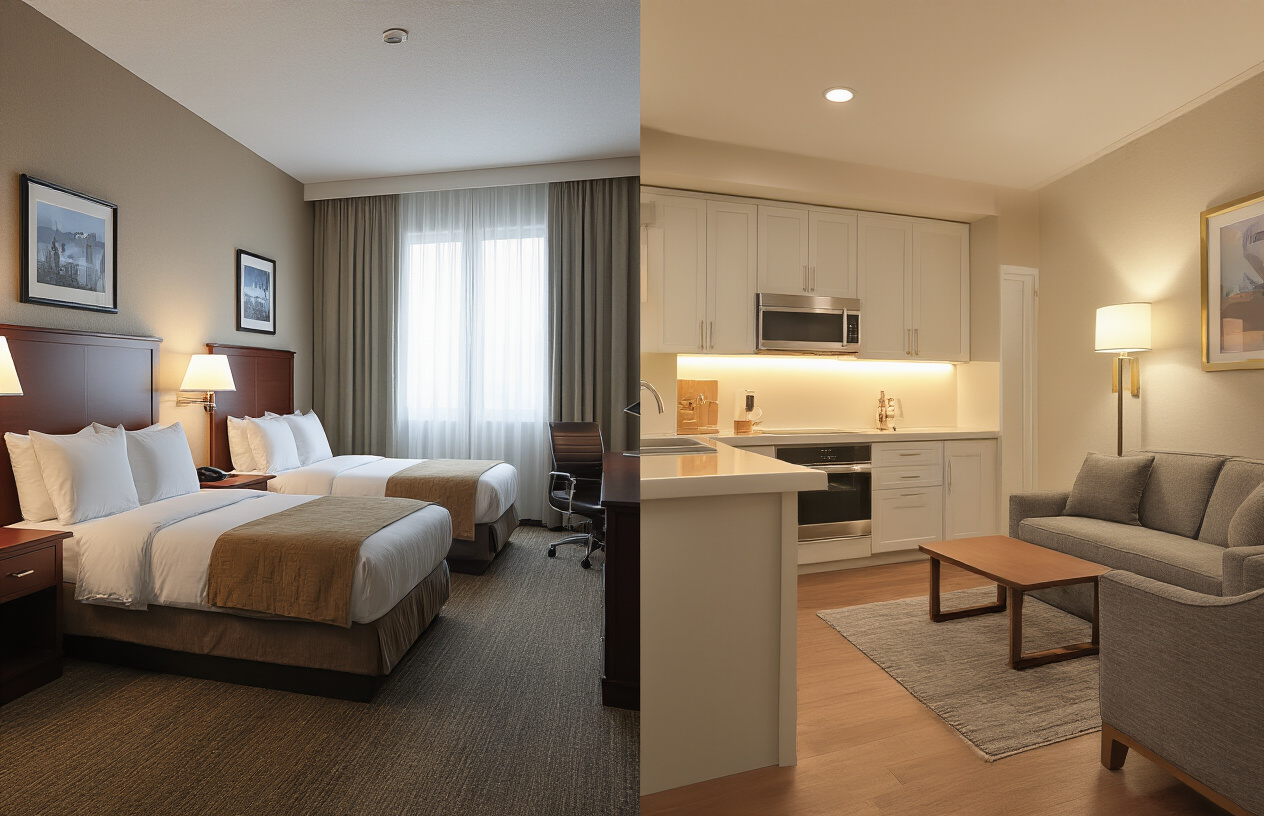
FirmStay properties represent a fundamentally different approach to accommodation compared to conventional hotels. These corporate housing solutions operate on extended-stay models, typically catering to guests who need accommodations for weeks, months, or even years rather than the traditional one-to-three-night hotel stays.
The core business model revolves around fully furnished rental properties that function more like temporary apartments than hotel rooms. Unlike hotels that generate revenue through nightly rates and ancillary services, FirmStay operators focus on longer-term contracts that provide stability and predictable income streams. These furnished rental properties come equipped with full kitchens, separate living areas, washers, dryers, and workspace configurations that hotels simply cannot match.
Traditional hotels rely on high turnover, daily housekeeping, and premium pricing for short stays. FirmStay properties eliminate many of these operational costs by reducing cleaning frequency, minimizing front desk operations, and focusing on tenant satisfaction rather than guest services. This operational efficiency translates directly into cost savings that benefit both operators and customers.
How they operate in the luxury accommodation space
The luxury segment of extended stay alternatives operates with remarkable sophistication, often surpassing traditional five-star hotels in terms of space, amenities, and personalized service. These properties maintain high-end furnishings, premium appliances, and designer interiors while offering the practical benefits of home-like living.
Luxury FirmStay operators curate their properties with the same attention to detail found in boutique hotels, but with residential comfort as the primary focus. Properties feature full-size kitchens with granite countertops, hardwood floors, high-thread-count linens, and premium entertainment systems. Many locations include access to fitness centers, swimming pools, concierge services, and business centers.
The service model combines hotel-like amenities with apartment-style independence. Guests receive weekly housekeeping, 24/7 maintenance support, and dedicated account management, while enjoying the privacy and space that traditional hotels cannot provide. This hybrid approach appeals particularly to executives and professionals who demand both luxury and functionality during extended business assignments.
Target market and customer demographics
Business travel accommodation represents the primary market for FirmStay properties, with corporate clients accounting for approximately 70% of bookings. These clients include consultants on long-term projects, executives in temporary relocations, employees undergoing extended training programs, and companies managing workforce mobility.
The demographic profile skews heavily toward high-income professionals aged 28-55, with household incomes typically exceeding $75,000 annually. Technology workers, healthcare professionals, financial services employees, and government contractors form the largest user segments. These customers value time efficiency, cost predictability, and the ability to maintain work-life balance during extended travel periods.
Insurance companies and healthcare systems frequently utilize these temporary furnished apartments for displaced families, medical patients requiring extended treatment, and staff relocations. The flexibility and cost-effectiveness compared to traditional hotel extended stays make FirmStay properties attractive for both personal and corporate budgets.
Global presence and market penetration
The alternative lodging options market has expanded rapidly across North America, Europe, and the Asia-Pacific regions, with major metropolitan areas showing the highest concentration of properties. Primary markets include New York, London, Tokyo, San Francisco, Toronto, and Dubai, where corporate housing demand consistently exceeds supply.
Market penetration varies significantly by region, with North American markets showing the highest adoption rates among both operators and consumers. European markets have embraced the model, particularly in financial centers like London and Frankfurt, where traditional hotel costs make extended stays financially prohibitive for most corporate budgets.
Current market data indicates over 50,000 FirmStay-style properties operating globally, with annual growth rates exceeding 15% in major business districts. The fragmented nature of the market means many properties operate independently or through smaller regional operators, creating opportunities for significant cost savings compared to branded hotel alternatives.
The Hidden $2 Billion Market Hotels Don't Advertise.

Revenue streams hotels keep private from consumers.
Traditional hotels operate on multiple revenue streams that guests never see on their final bills. While the nightly room rate captures most attention, hotels generate substantial income through ancillary services, partnership commissions, and premium service markups. These hidden profit centers often add 30-40% to the actual cost of accommodation, which gets passed down to consumers through inflated base rates.
The food and beverage markup represents one of the largest concealed revenue sources. Hotels typically charge 300-500% above cost for room service, minibar items, and restaurant meals. Conference room rentals, spa services, and parking fees create additional profit margins that can exceed the room revenue itself. Corporate housing alternatives like FirmStay properties eliminate these hidden charges by providing transparent, all-inclusive pricing structures.
Hotels also profit from currency exchange fees, early check-in charges, and premium Wi-Fi services. These seemingly small additions accumulate into significant revenue streams that boost overall profitability while remaining largely invisible to price-conscious travelers seeking extended stay alternatives.
Corporate partnerships and bulk booking profits
The corporate travel industry generates over $1.4 trillion annually, with hotels capturing substantial portions through exclusive partnership agreements. Major hotel chains negotiate volume discounts with corporations, then pocket the difference between negotiated corporate rates and published prices. This practice creates a dual pricing system where individual travelers subsidize corporate discounts through higher standard rates.
Business travel accommodation contracts often include guaranteed room blocks, regardless of actual occupancy. Hotels benefit from guaranteed revenue while corporations pay for unused inventory. These partnerships frequently involve revenue-sharing agreements where hotels provide kickbacks to corporate travel managers, creating conflicts of interest that inflate accommodation costs.
Booking platforms and travel management companies receive commission percentages ranging from 10-25% on corporate reservations. These commissions get embedded into room rates, meaning business travelers pay premium prices to support intermediary profits. Corporate housing providers bypass these commission structures entirely, offering direct pricing that eliminates middleman markups.
Group booking arrangements create additional profit opportunities through contract penalties, change fees, and minimum stay requirements. Hotels leverage these contractual obligations to maintain high occupancy rates while charging premium prices for furnished rental properties that often provide superior value propositions.
Property management fees and commission structures
Behind every hotel booking lies a complex web of management fees and commission structures that significantly impact final pricing. Hotel management companies typically charge owners 3-6% of gross revenue plus incentive fees based on performance metrics. These costs get factored into room rates, creating an invisible tax on every reservation.
Franchise fees add another layer of hidden expenses. Major hotel brands charge franchise partners 4-6% of room revenue plus marketing fees of 2-4%. Independent hotels avoid these franchise obligations but still face property management expenses that inflate operational costs. Alternative lodging options like extended stay properties often operate with streamlined management structures that eliminate unnecessary fee layers.
Third-party booking platforms extract commissions ranging from 15-25% on each reservation. Hotels compensate for these fees by maintaining higher direct booking rates, which means guests pay inflated prices regardless of booking channel. The commission structure creates artificial price inflation that benefits booking platforms at consumer expense.
Property management companies also charge hotels for services like revenue management, digital marketing, and guest relations. These ancillary fees can add $50-100 per occupied room annually. Temporary furnished apartments typically operate with simplified management structures that focus on core accommodation services rather than profit-maximizing ancillary charges, resulting in more transparent pricing for extended stay deals.
Why Hotels Actively Hide This Alternative
Direct Competition Threat to Traditional Booking Models
Traditional hotels have built their entire revenue structure around the standard daily booking model, charging premium rates for single nights or short stays. FirmStay properties and corporate housing options completely upend this approach by offering extended stay alternatives at significantly lower nightly rates. When travelers discover they can secure furnished rental properties for weeks or months at a fraction of hotel costs, the math becomes undeniable.
Hotels recognize that their high-margin, short-term model can't compete with the economics of extended stays. A business traveler paying $200 per night for a standard hotel room could secure a fully furnished apartment through alternative lodging options for $80-120 per night on a monthly basis. This pricing differential threatens the fundamental assumptions hotels make about corporate travel accommodation demand.
The threat extends beyond pricing alone. FirmStay properties often provide more space, full kitchens, separate living areas, and residential amenities that hotels simply cannot match within their structural limitations. When travelers experience the comfort and value proposition of these alternative accommodations, returning to cramped hotel rooms becomes increasingly difficult to justify.
Loss of Control Over Customer Relationships
Hotels invest heavily in customer relationship management systems, loyalty programs, and direct booking platforms to maintain control over their guest interactions. When travelers book corporate housing or extended stay deals through third-party providers, hotels lose valuable customer data and the ability to build lasting relationships.
This loss of control creates a ripple effect across hotel operations. Marketing departments can no longer track customer preferences, purchasing patterns, or travel frequency. Revenue management teams lose crucial data points needed to optimize pricing strategies. Guest services teams miss opportunities to upsell amenities or services that generate additional revenue.
Business travel accommodation through FirmStay properties typically involves property management companies or corporate housing specialists who develop direct relationships with travelers and companies. These intermediaries become the primary point of contact, effectively cutting hotels out of the relationship entirely. Hotels understand that once corporate clients establish relationships with alternative providers, winning back that business becomes exponentially more difficult.
Reduced Profit Margins on Standard Room Bookings
Hotel profit margins depend heavily on maximizing revenue per available room through strategic pricing and occupancy management. Extended stay alternatives disrupt this model by offering longer-term commitments at lower daily rates, forcing hotels to reconsider their pricing structures when competing directly.
Standard hotel rooms generate revenue through various channels beyond the base room rate, including parking fees, resort charges, food and beverage sales, and ancillary services. Temporary furnished apartments eliminate many of these revenue streams since guests can cook their own meals, often include parking, and provide residential-style amenities without additional charges.
The comparison becomes stark when examining total costs. A hotel might charge $180 per night plus $25 parking, $15 resort fees, and expect $30-50 in food and beverage revenue per guest. Alternative lodging options bundle these services into a lower all-inclusive rate, making the value proposition obvious to cost-conscious travelers.
Hotels also face pressure from corporate clients who increasingly scrutinize travel expenses. When procurement departments discover the cost savings available through corporate travel secrets like extended stay properties, they often mandate policy changes that exclude traditional hotels for longer assignments.
Brand Loyalty Disruption Concerns
Hotel chains have spent decades building brand recognition and loyalty programs designed to create repeat customers. Travelers who experience the value and comfort of furnished rental properties often question the logic of paying premium prices for limited hotel amenities, even when staying for shorter periods.
This disruption extends beyond individual travel decisions. Companies that implement policies favoring corporate housing for extended assignments often find their employees prefer these accommodations even for shorter trips. The residential experience, additional space, and cost savings create a preference shift that challenges traditional brand loyalty assumptions.
Hotels worry that exposure to alternative accommodations creates a domino effect where travelers begin researching options beyond traditional hotel booking channels for all their travel needs. This behavior change threatens the predictable revenue streams that hotel brands depend on for financial planning and growth projections.
The concern becomes particularly acute with younger business travelers who prioritize value and authentic experiences over traditional luxury markers. These travelers are more likely to embrace alternative lodging options and share their discoveries through social networks, potentially influencing broader market adoption patterns that could fundamentally reshape the hospitality industry landscape.
Cost Savings You Can Access Through FirmStay

Average Percentage Savings Compared to Hotel Rates
FirmStay properties consistently deliver savings ranging from 30% to 70% compared to traditional hotel rates, with the most significant savings appearing during extended stays. These corporate housing alternatives bypass the markup structures that hotels apply to nightly rates, offering direct access to wholesale pricing typically reserved for large corporations.
The savings become even more pronounced when comparing luxury accommodations. A premium hotel suite costing $400 per night translates to roughly $12,000 monthly, while equivalent furnished rental properties through FirmStay networks average $4,200-$6,000 for the same period. Business travelers accessing these alternative lodging options report average monthly savings of $3,000-$6,000 compared to extended hotel stays.
Market analysis reveals that FirmStay properties maintain competitive pricing year-round, avoiding the seasonal fluctuations and demand-based pricing that drive hotel costs skyward during peak periods. This pricing stability makes corporate housing particularly attractive for travelers with flexible timing or extended accommodation needs.
Extended Stay Discounts and Weekly Rates
Weekly rates through FirmStay properties unlock substantial discounts that compound over time. Most corporate housing providers offer progressive pricing structures where costs decrease significantly after the first week, with additional reductions at 30, 60, and 90-day intervals.
| Stay Duration | Typical Discount | Monthly Equivalent |
|---|---|---|
| 7-14 days | 15-25% off nightly | 20-30% hotel savings |
| 15-29 days | 35-45% off nightly | 45-55% hotel savings |
| 30+ days | 50-65% off nightly | 60-70% hotel savings |
These extended stay deals reflect the operational reality of furnished rental properties, where longer commitments reduce turnover costs and vacancy periods. Travelers booking minimum two-week stays have access to pricing tiers that hotels simply cannot match due to their different business models and overhead structures.
Weekly rates also include utilities, internet, and basic amenities that hotels charge separately, creating additional value layers often overlooked in initial price comparisons. The all-inclusive nature of these rates eliminates surprise fees and provides predictable accommodation budgets for extended business travel.
Corporate-Level Pricing for Individual Travelers
Individual travelers gain access to the same corporate-negotiated rates that companies secure through volume agreements with FirmStay providers. This access represents a fundamental shift from traditional booking hierarchies where individual consumers paid premium rates while corporations enjoyed significant discounts.
Corporate travel secrets include pre-negotiated rate structures that reduce accommodation costs by 40-60% compared to public hotel pricing. These business travel accommodation agreements typically include additional services like housekeeping, concierge support, and maintenance at no extra charge.
The pricing transparency of temporary furnished apartments contrasts sharply with hotel revenue management systems that adjust rates multiple times daily based on demand algorithms. FirmStay properties maintain consistent rate cards that travelers can rely on for budget planning, eliminating the uncertainty of fluctuating hotel prices.
Smart travelers leverage corporate housing booking platforms that aggregate inventory from multiple providers, ensuring access to the most competitive rates available. These platforms often include rate matching guarantees and additional discounts for direct bookings, creating multiple layers of savings that compound into substantial cost reductions over traditional hotel stays.
Quality and Amenities That Rival Five-Star Hotels

Luxury Furnishings and Premium Locations
FirmStay properties and corporate housing deliver upscale accommodations that often surpass traditional hotel standards. These furnished rental properties feature designer furniture, high-end appliances, and carefully curated décor that creates a sophisticated living environment. Many properties occupy prime real estate locations in major business districts, offering convenient access to corporate centers while maintaining the exclusivity typically associated with luxury hotels.
The attention to detail in these alternative lodging options reflects a commitment to providing executive-level accommodations. Premium bedding, quality linens, and stylish furnishings create an atmosphere that rivals five-star establishments. Strategic placement in desirable neighborhoods means guests enjoy proximity to fine dining, shopping, and cultural attractions without paying premium hotel rates for location access.
Full Kitchen Facilities and Residential-Style Living
Extended stay alternatives shine in their provision of complete kitchen facilities and spacious living areas. These business travel accommodations include full-size refrigerators, dishwashers, quality cookware, and dining areas that transform the travel experience. The residential layout typically features separate living and sleeping spaces, providing the comfort and functionality that cramped hotel rooms cannot match.
Professional-grade appliances and ample counter space enable guests to maintain their dietary preferences and routines. The ability to prepare meals reduces dining costs significantly while offering the convenience of home-style cooking. Storage capacity and pantry space accommodate longer stays without the limitations of mini-fridges and coffee makers found in standard hotel accommodations.
Concierge Services and Personalized Experiences
Corporate housing providers deliver tailored services that adapt to individual preferences and business requirements. Dedicated account managers coordinate everything from grocery stocking to transportation arrangements, creating a personalized experience that exceeds typical hotel service standards. These temporary furnished apartments often include housekeeping services, maintenance support, and 24/7 assistance that rivals luxury hotel concierge offerings.
The service model focuses on anticipating needs rather than simply responding to requests. Property managers develop familiarity with guest preferences over extended stays, enabling proactive service delivery that creates a truly customized experience. This level of attention extends to business amenities, technology support, and local area expertise that enhances both comfort and productivity.
Privacy Advantages Over Traditional Hotel Stays
Extended stay deals through FirmStay properties offer significant privacy benefits compared to hotel environments. Guests enjoy separate entrances, private parking, and residential-style settings that eliminate the constant foot traffic and public areas associated with hotels. The absence of lobby crowds, elevator waits, and hallway noise creates a more peaceful and professional environment.
These corporate travel secrets include access to private outdoor spaces, balconies, or patios that provide personal retreat areas unavailable in standard hotel rooms. The residential nature of these properties means fewer interruptions from housekeeping, maintenance, or other guests, allowing for uninterrupted work sessions and genuine relaxation time.
How to Book FirmStay Properties Like an Insider

Best platforms and booking strategies
Several specialized platforms serve as gateways to the corporate housing market, each offering distinct advantages for savvy travelers. BridgeStreet Global Hospitality operates one of the largest networks of furnished rental properties worldwide, with an inventory spanning over 85,000 units across major business districts. Oakwood Corporate Housing provides another extensive platform, particularly strong in North American markets and known for quality control standards that rival luxury hotels.
Direct booking through corporate housing providers often yields better rates than third-party aggregators. Many companies maintain dedicated booking portals that bypass commission fees typically charged by intermediary platforms. Extended Stay America and similar chains offer hybrid models, combining hotel-style booking with apartment-like amenities at competitive rates.
Professional travel management companies maintain relationships with corporate housing suppliers, accessing inventory blocks and negotiated rates unavailable to individual consumers. Establishing relationships with local property managers in frequently visited cities creates opportunities for repeat guest discounts and preferred treatment.
The key strategy involves building a portfolio of preferred suppliers across different price points and geographical markets. Top-tier providers like Korman Communities focus on luxury furnished apartments in premium locations, while budget-conscious options through platforms like Furnished Quarters deliver substantial savings without compromising essential amenities.
Timing your reservations for maximum savings
Market dynamics in corporate housing follow predictable patterns that informed travelers can exploit for significant cost reductions. Peak corporate travel seasons—typically September through November and February through April—drive higher demand and pricing. Booking during shoulder periods often yields 20-30% savings on comparable accommodations.
Monthly booking patterns reveal additional opportunities. Properties experience lower occupancy during the first two weeks of each month, when corporate relocations and project assignments are less common. This translates to more negotiating power and access to premium units at standard rates.
Seasonal variations create substantial pricing fluctuations in tourist-heavy markets. Miami corporate housing rates drop 40-50% during hurricane season, while maintaining the same luxury amenities and prime locations. Similarly, San Francisco properties offer deep discounts during winter months when business travel traditionally slows.
Last-minute availability often presents exceptional value opportunities. Corporate housing providers prefer occupied units to vacant ones, leading to significant rate reductions for stays beginning within 72 hours. Flexible travelers can capitalize on corporate cancellations and unexpected inventory releases.
Economic indicators influence market pricing across the extended stay alternatives sector. During economic downturns, companies reduce business travel budgets, creating oversupply conditions that benefit individual travelers seeking temporary furnished apartments.
Negotiation tactics for extended stays
Extended duration creates leverage in corporate housing negotiations that hotels cannot match. Stays exceeding 30 days trigger different pricing structures, often reducing daily rates by 15-25% compared to shorter-term bookings. Property managers view long-term occupants as stable revenue sources, making them willing to negotiate on rates and terms.
Bulk booking strategies prove effective when securing accommodations for teams or multiple trips throughout the year. Committing to a certain number of room-nights annually often unlocks volume discounts typically reserved for corporate clients. This approach works particularly well when coordinated through a single point of contact at the property management company.
Ancillary service negotiations extend beyond base room rates. Corporate housing providers often bundle services like housekeeping, utilities, and parking into packages. Unbundling these services and negotiating each component separately frequently reduces total costs while maintaining essential amenities.
Payment terms present another negotiation opportunity rarely available in traditional hotel bookings. Extended stay properties often accept monthly payment schedules instead of upfront charges, improving cash flow for business travelers. Some providers offer early payment discounts ranging from 2-5% for advance payment of entire stay durations.
Property condition assessments during initial tours create negotiating leverage. Older furnishings, needed maintenance, or dated electronics become talking points for rate reductions. Documentation of property conditions through photos provides evidence supporting discount requests.
Multi-unit negotiations work effectively for relocating families or business teams. Securing multiple apartments within the same complex often triggers group discounts while ensuring consistent quality across accommodations. This strategy proves particularly valuable in high-demand markets where alternative lodging options remain limited.

The travel industry's best-kept secret lies in the $2 billion FirmStay and resort market that operates quietly behind the scenes. These properties offer the same luxury amenities and service standards as five-star hotels, often at significantly lower rates, because they don't rely on traditional hotel marketing channels or pay hefty commission fees to booking platforms. Hotels prefer guests remain unaware of these alternatives since they represent direct competition that challenges their pricing models.
Smart travelers who discover FirmStay properties gain access to exclusive accommodations that deliver exceptional value without compromising on quality. The key to unlocking these opportunities lies in knowing where to look and how to book directly with these properties. By stepping away from conventional hotel booking methods and exploring this hidden market, travelers can transform their accommodation experiences while keeping more money in their pockets for the adventures that matter most.
No comments:
Post a Comment