
Play School
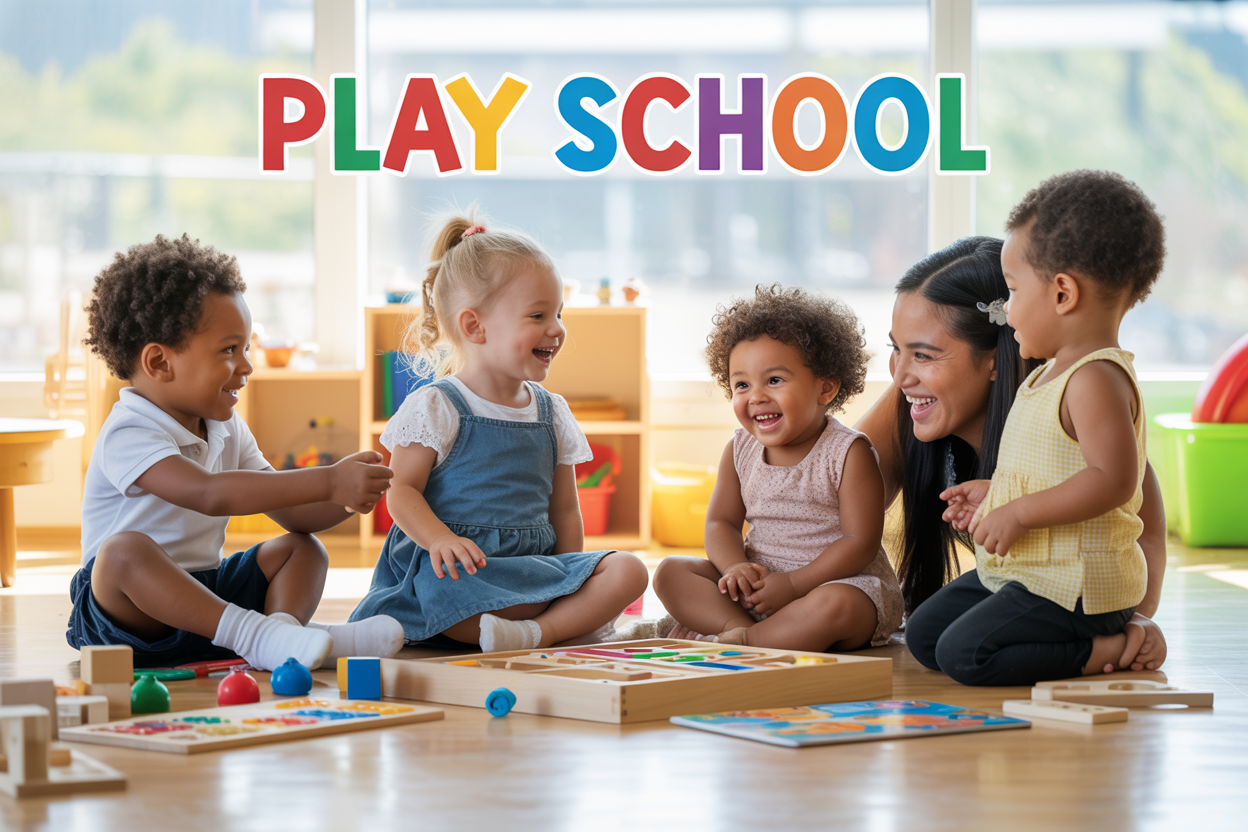
Play school serves as a foundational stepping stone for children aged 2-5 years, offering structured yet flexible environments where early childhood development thrives through engaging activities and exploration. Parents seeking quality preschool education will find that modern play school programs blend fun with learning, creating experiences that build essential skills while keeping young minds curious and excited.
This comprehensive guide examines the fundamental benefits of play-based learning and how they influence cognitive, social, and emotional development in young learners. The discussion will cover practical, age-appropriate learning activities that maximize developmental potential while maintaining the joy and wonder that make learning a memorable experience.
Additionally, the guide examines key factors for choosing the right preschool, including curriculum quality, teacher qualifications, and facility features that create a supportive learning environment. Finally, readers will discover effective methods for measuring child development progress in play school settings, ensuring educational goals align with each child's unique learning journey.
Benefits of Play-Based Learning for Young Children
Enhanced Cognitive Development Through Structured Play Activities
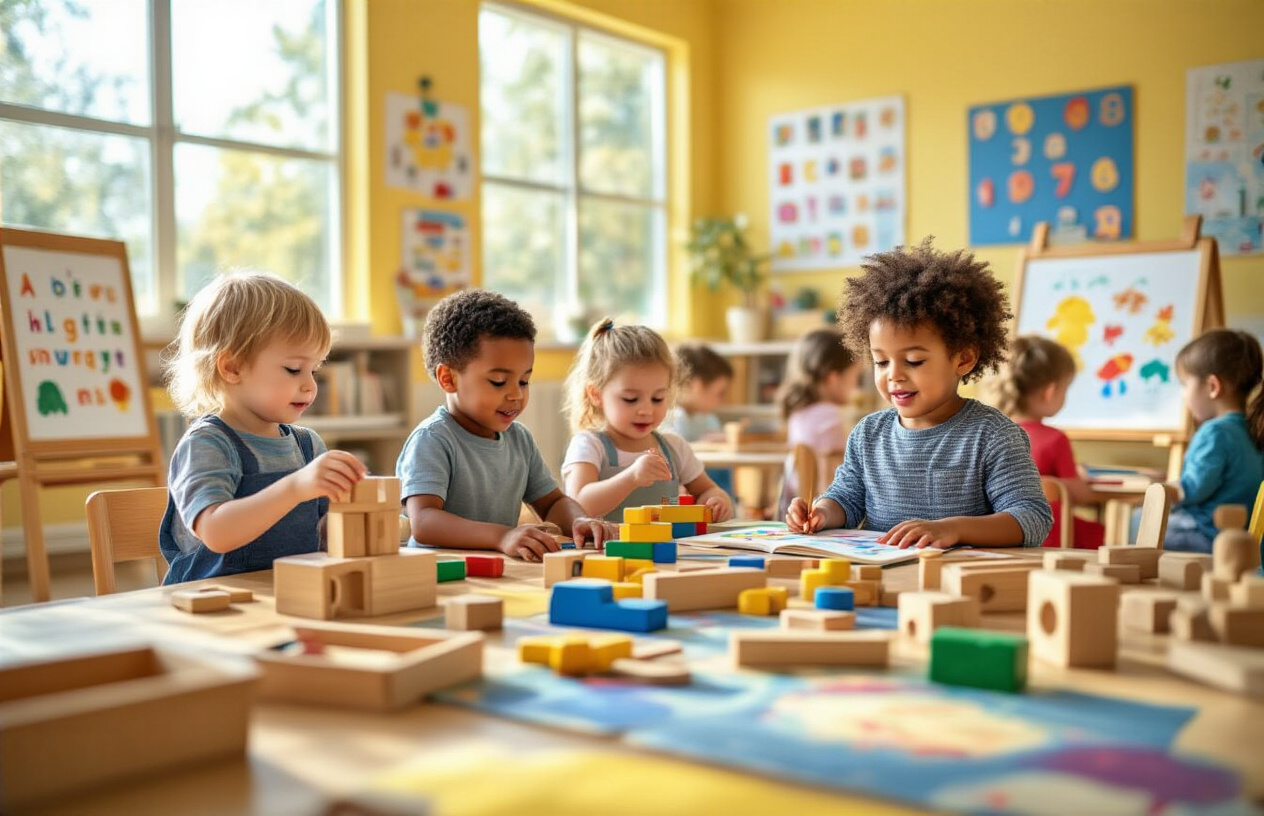
Play-based learning transforms the way young minds absorb and process information, creating neural pathways that support lifelong learning. When children engage in structured play activities at a quality play school, their brains develop crucial executive functions, including memory, attention span, and cognitive flexibility. These activities naturally encourage children to think critically, analyze situations, and make connections between different concepts.
Research shows that children who participate in well-designed play school curricula demonstrate stronger mathematical reasoning and language development compared to their peers in traditional academic settings. Building blocks, puzzles, and interactive games challenge young learners to recognize patterns, sequence events, and develop spatial awareness. These foundational skills directly translate to academic success in reading, mathematics, and science as children progress through their educational journey.
The cognitive benefits extend beyond academic preparation. Play-based learning environments foster curiosity and independent thinking, encouraging children to ask questions and explore solutions. This natural, inquiry-based approach builds confidence in learning new concepts and develops resilience when facing challenges.
Improved Social Skills and Emotional Intelligence Building
Preschool activities within play-based settings provide countless opportunities for children to practice essential social interactions. Through collaborative games, role-playing scenarios, and group projects, young learners develop communication skills, learn to share resources, and practice conflict resolution. These experiences teach children to read social cues, express emotions appropriately, and build empathy for others.
Play school environments create safe spaces where children can experiment with different social roles and relationships. Whether participating in dramatic play or working together on creative projects, children learn to negotiate, compromise, and celebrate each other's achievements. These skills form the foundation for healthy relationships throughout life.
Emotional regulation develops naturally through play-based learning as children learn to manage frustration during challenging activities, celebrate successes with peers, and cope with disappointment when things don't go as planned. Teachers in quality play schools guide children through these emotional experiences, helping them identify feelings and develop healthy coping strategies.
Better Preparation for Formal Education Transitions
Play-based learning benefits include creating smooth transitions to more structured academic environments. Children who attend play school develop essential school readiness skills, including following routines, listening to instructions, and working independently. These foundational behaviors make the transition to kindergarten less stressful and more successful.
The play school curriculum naturally introduces pre-academic concepts through engaging activities rather than formal instruction. Children encounter letters, numbers, and basic scientific concepts through games and exploration, building positive associations with learning. This approach creates eager learners who enter formal education with confidence and enthusiasm.
Age-appropriate learning activities in play-based settings also develop fine motor skills necessary for writing, cutting, and other academic tasks. Through art projects, manipulative toys, and hands-on experiments, children strengthen hand-eye coordination and develop the muscle control needed for future academic success.
Increased Creativity and Problem-Solving Abilities
Early childhood development flourishes when children have opportunities to think creatively and approach challenges from multiple angles. Play school environments encourage open-ended exploration where children can experiment, make mistakes, and discover innovative solutions. This freedom to explore builds creative thinking skills that benefit children throughout their academic and professional lives.
Problem-solving abilities develop naturally when children encounter challenges during play activities. Whether figuring out how to build a stable tower, resolving conflicts with peers, or completing complex puzzles, children learn persistence and develop multiple strategies for overcoming obstacles. These experiences build confidence in tackling new challenges and foster a growth mindset.
Creative expression through art, music, and imaginative play allows children to communicate ideas and emotions in unique ways. Play school environments that value creativity produce children who think outside the box, approach problems with innovation, and maintain curiosity about the world around them. These creative problem-solving skills become increasingly valuable as children progress through school and eventually enter the workforce.
Age-Appropriate Activities That Maximize Learning Potential
Sensory Play Experiences for Toddlers and Preschoolers
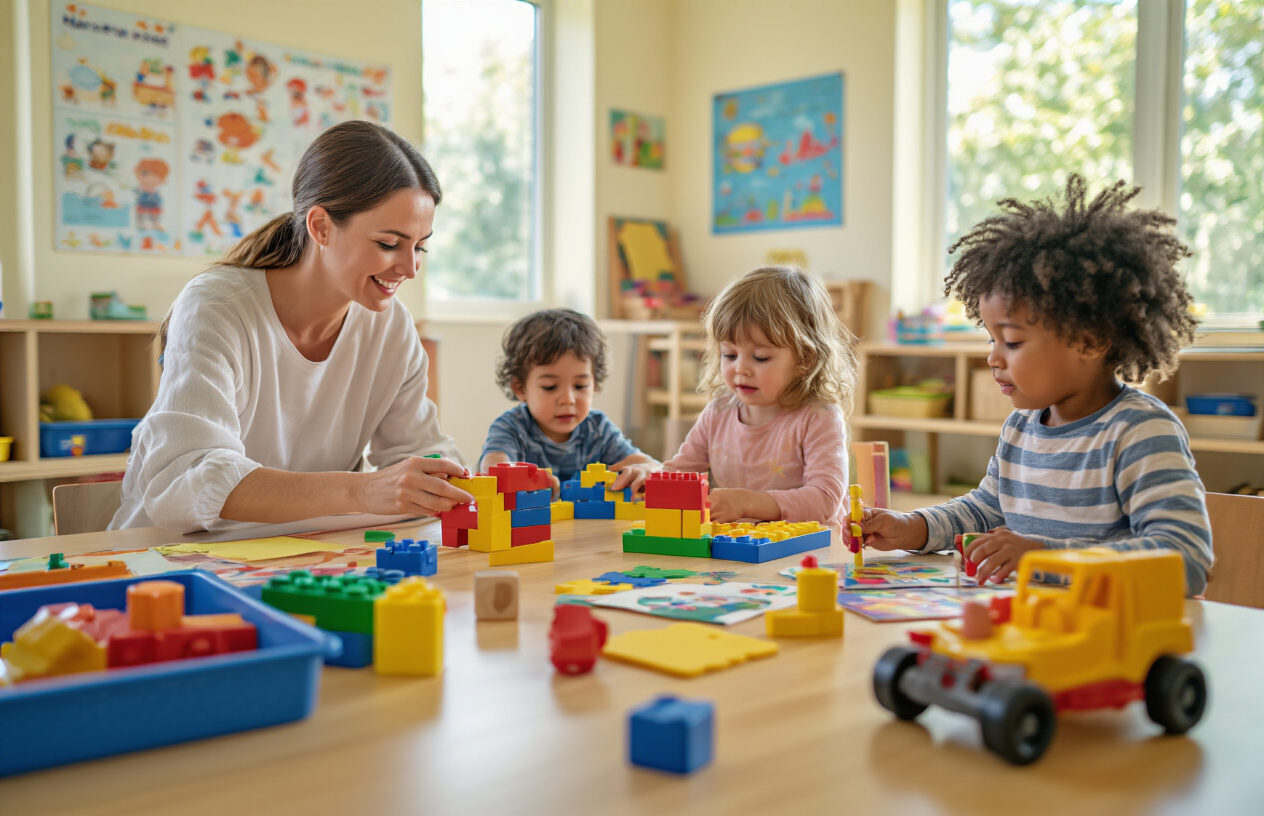
Sensory play activities form the foundation of effective preschool education by engaging multiple senses simultaneously. Water tables provide endless opportunities for children to explore concepts like volume, temperature, and cause-and-effect relationships while developing hand-eye coordination. Sand play allows young learners to practice pouring, scooping, and molding while strengthening finger muscles essential for writing readiness.
Texture bins filled with rice, beans, or pasta offer tactile experiences that calm anxious children while promoting focus and concentration. These age-appropriate learning activities help toddlers distinguish between rough and smooth, hard and soft, creating neural pathways that support future academic learning. Play-dough and clay activities develop bilateral coordination as children roll, pinch, and shape materials.
Sensory bottles containing glitter, water, and small objects provide visual stimulation while teaching children about density and movement. These tools prove particularly valuable for children who learn best through tactile exploration, making play-based learning benefits accessible to diverse learning styles.
Interactive Storytelling and Language Development Games
Interactive storytelling transforms passive listening into active engagement, accelerating language development in meaningful ways. Picture books with repetitive phrases encourage children to predict outcomes and join in familiar refrains, building phonological awareness and vocabulary simultaneously. Puppet shows bring characters to life, allowing children to practice dialogue and emotional expression in safe environments.
Story stones or picture cards prompt creative storytelling, helping children organize thoughts and develop narrative skills. These activities strengthen pre-literacy foundations while fostering imagination and communication confidence. Rhyming games and finger plays introduce rhythm and sound patterns, preparing young minds for reading success.
Role-playing activities based on familiar stories allow children to explore different perspectives and practice social language. When children act out "The Three Bears," they naturally use positional words, size comparisons, and emotional vocabulary. These preschool activities create multiple opportunities for language practice without feeling like formal instruction.
Mathematical Concepts Through Hands-On Manipulatives
Concrete manipulatives make abstract mathematical concepts accessible to young learners who think primarily in concrete terms. Counting bears, pattern blocks, and sorting games introduce number recognition, one-to-one correspondence, and classification skills through playful exploration. Children develop number sense by physically manipulating objects rather than memorizing abstract symbols.
Shape sorters and puzzle activities build spatial reasoning while introducing geometric vocabulary. Measuring activities using non-standard units like paper clips or blocks help children understand length, height, and comparison concepts. These hands-on approaches align perfectly with the play school curriculum goals of making learning enjoyable and meaningful.
Cooking activities provide natural opportunities to explore fractions, measurement, and sequencing. When children help measure ingredients or count cups, they practice mathematical thinking in real-world contexts. Pattern-making with beads, blocks, or natural materials develops logical thinking skills essential for algebraic reasoning later in their educational journey.
Science Exploration Through Safe Experiments
Age-appropriate science experiments spark curiosity while building observation and prediction skills. Simple activities like mixing colors with water demonstrate cause-and-effect relationships while introducing basic chemistry concepts. Floating and sinking experiments help children understand density and buoyancy through hands-on discovery.
Growing seeds in clear containers allows children to observe plant growth cycles firsthand, fostering patience and scientific thinking. Weather observation activities teach children to notice patterns and make predictions about their environment. These early childhood development experiences create positive associations with scientific inquiry.
Magnet exploration activities reveal invisible forces while encouraging hypothesis formation. Children naturally ask "What will stick?" and test their predictions, developing critical thinking skills. Sound experiments using different materials help children understand vibration and pitch concepts through active experimentation rather than passive instruction.
Art and Craft Projects That Develop Fine Motor Skills
Carefully planned art activities strengthen the small muscles necessary for writing while encouraging creative expression. Cutting activities with child-safe scissors develop bilateral coordination and hand strength. Threading beads or pasta builds pincer grasp strength essential for pencil control.
Painting with various tools - brushes, sponges, cotton swabs - provides diverse tactile experiences while developing wrist flexibility and control. Collage activities requiring tearing and gluing paper strengthen finger muscles while encouraging creative decision-making. These supportive learning environment elements combine skill development with artistic exploration.
Drawing and coloring activities progress naturally from large scribbles to controlled marks, supporting pre-writing skill development. Clay work strengthens all hand muscles while allowing three-dimensional exploration. When children create art projects, they practice following multi-step directions, planning, and problem-solving - skills that transfer to academic learning across all subjects.
Choosing the Right Play School for Your Child's Needs
Essential Qualifications and Credentials to Look for in Staff
When evaluating potential play schools, the quality of staff makes all the difference in a child's early learning experience. Look for educators who hold relevant early childhood education degrees or certifications in child development. These credentials ensure teachers understand developmental milestones and can adapt their approach to meet individual learning needs.
Beyond formal education, experienced play school teachers bring practical knowledge about managing diverse classroom dynamics and recognizing signs of developmental delays or learning challenges. Many states require specific licensing for preschool educators, so verify that all teaching staff maintain current certifications.
Special training in play-based learning methodologies adds significant value to a program. Teachers who understand how to guide learning through structured play create more engaging and effective educational experiences. First aid and CPR certification should be standard requirements for all staff members working directly with children.
The staff-to-child ratio directly impacts the quality of attention each child receives. Smaller ratios allow teachers to provide more individualized support and recognize each child's unique learning style and pace. Research consistently shows that lower ratios lead to better developmental outcomes in preschool settings.
Safety Standards and Facility Requirements Evaluation
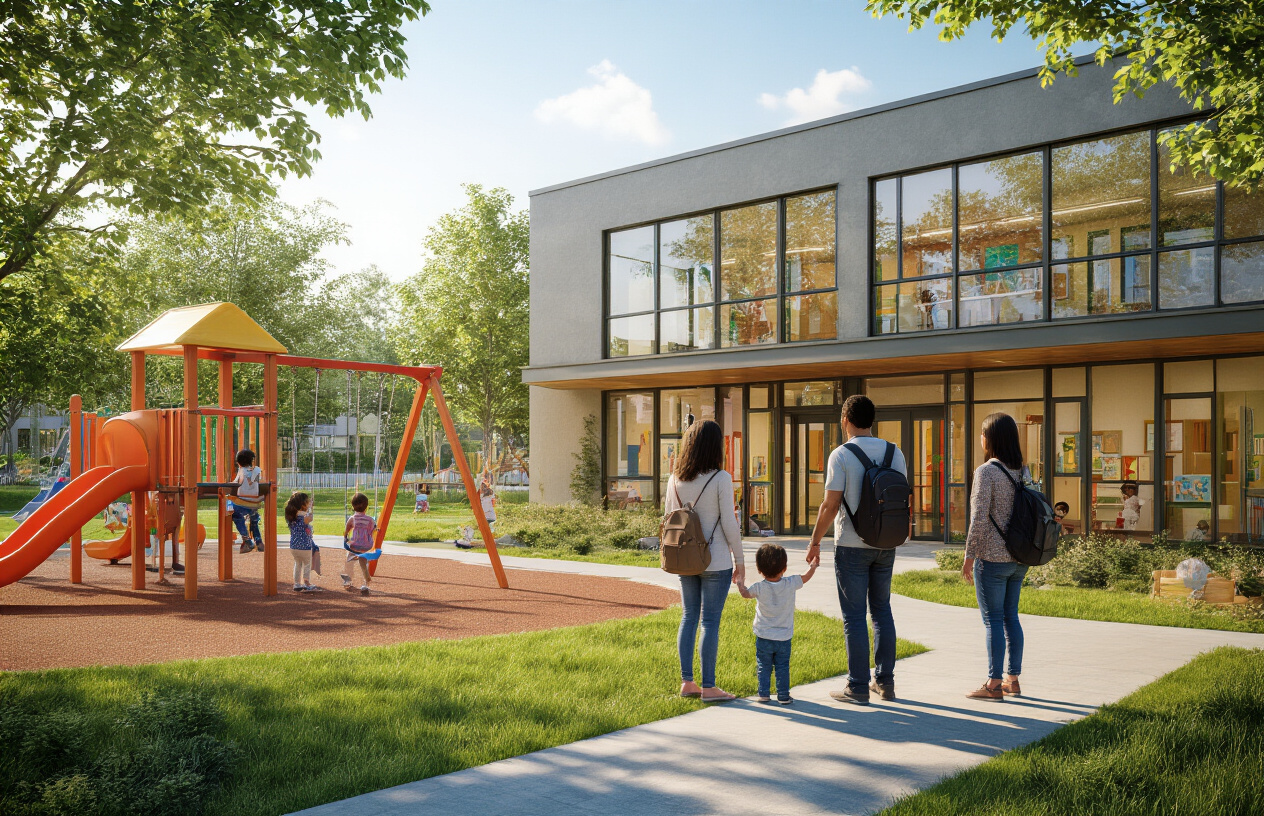
Physical safety forms the foundation of any quality play school environment. Begin by examining the facility's overall condition, including secure entrances, properly maintained playground equipment, and age-appropriate furnishings. All play areas should be well-maintained with soft surfaces under climbing structures and adequate spacing between activity zones.
Indoor environments require proper ventilation, adequate lighting, and clean, sanitized spaces throughout. Check that bathrooms are easily accessible and appropriately sized for young children, with proper handwashing facilities and supervision protocols in place.
Emergency preparedness demonstrates a school's commitment to child safety. Review their evacuation procedures, emergency contact protocols, and staff training for various scenarios. Quality play schools conduct regular safety drills and maintain updated emergency supplies and communication systems.
Background checks for all staff members represent another non-negotiable safety requirement. Reputable schools willingly share information about their hiring practices and ongoing safety training programs for employees.
Curriculum Approach Alignment with Your Family Values
Different preschool curricula emphasize varying aspects of child development, making alignment with family values essential for a positive experience. Some programs focus heavily on academic readiness, while others prioritize social-emotional development through creative expression and collaborative play.
Consider whether the school's approach to discipline and behavior management matches family expectations. Some programs use positive reinforcement strategies, while others might employ different methods for guiding behavior and resolving conflicts between children.
The balance between structured activities and free play varies significantly between programs. Families who value creativity and self-directed learning might prefer schools with more open-ended play opportunities, while those prioritizing school readiness might choose more structured academic preparation.
Cultural sensitivity and inclusion practices matter greatly in today's diverse communities. Schools that celebrate different backgrounds and incorporate multicultural perspectives create welcoming environments where all children can thrive and develop respect for diversity.
Communication styles between school and home should feel comfortable and productive. Some programs provide detailed daily reports and frequent parent conferences, while others maintain more informal communication approaches. Choose a style that supports family involvement and keeps everyone informed about the child's progress and daily experiences.
Creating Supportive Learning Environments at Home
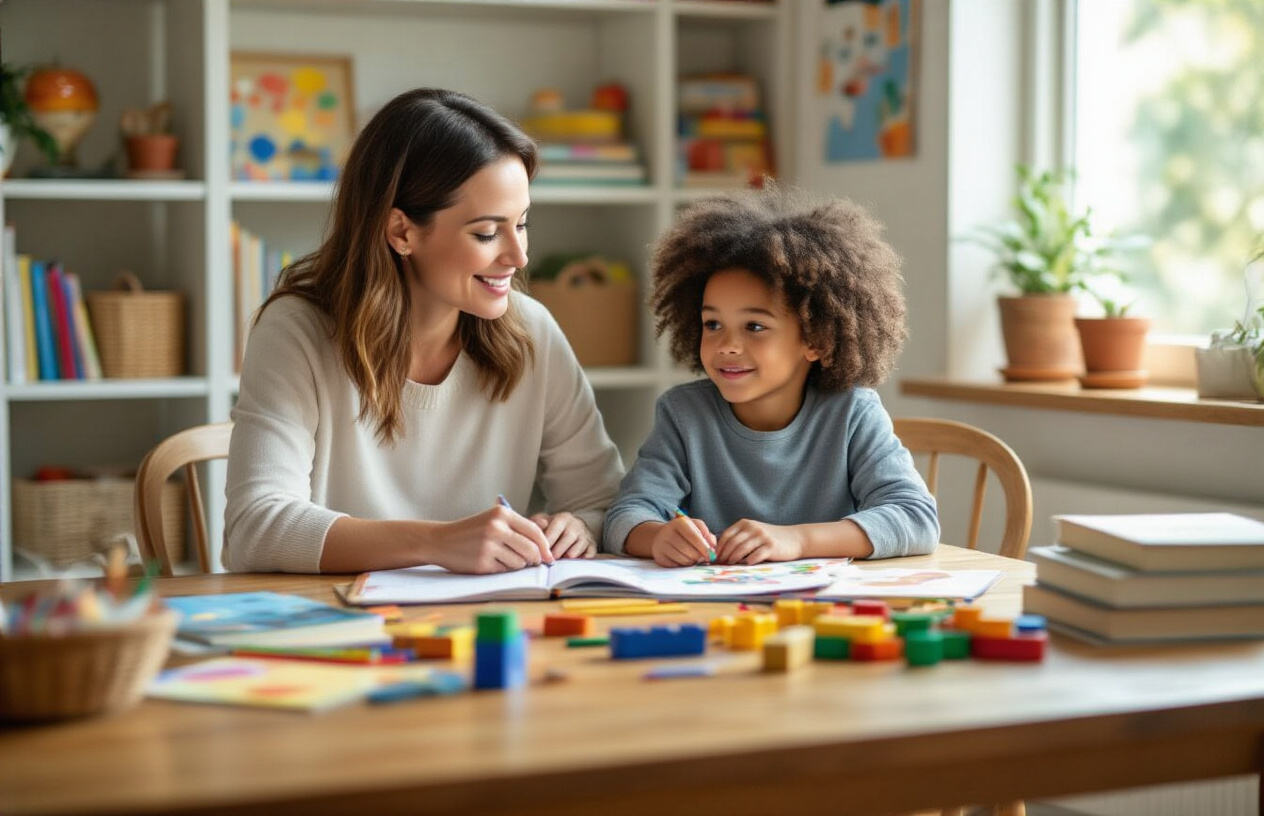
Designing Play Spaces That Encourage Independent Exploration
Children thrive when their home environment offers multiple opportunities for self-directed discovery. Dedicated play areas should feature easily accessible storage solutions that allow young learners to retrieve and organize materials independently. Low shelving units, labeled bins, and open containers encourage autonomy while maintaining order.
The physical layout matters significantly. Creating distinct zones for different types of activities helps children understand where various forms of play occur. A quiet reading corner with soft cushions, a building area with adequate floor space, and an art station with proper ventilation each serve unique developmental purposes.
Safety remains paramount without stifling creativity. Rounded furniture edges, secure storage for small parts, and age-appropriate accessibility ensure children can explore confidently. Natural lighting and proper ventilation create inviting spaces that support extended periods of focused play.
Flexible arrangements allow spaces to evolve with changing interests. Furniture on wheels, modular storage systems, and multi-purpose surfaces adapt to various activities throughout the day. This adaptability mirrors the supportive learning environment children experience in quality play school settings.
Selecting Educational Toys and Materials for Different Developmental Stages
Educational materials should align with specific developmental milestones while offering enough challenge to promote growth. Toddlers benefit from sensory-rich materials like textured blocks, musical instruments, and water play accessories that develop fine motor skills and cause-and-effect understanding.
Preschoolers require more complex materials that support emerging literacy and numeracy skills. Magnetic letters, counting manipulatives, pattern blocks, and simple science experiments engage their growing cognitive abilities. Art supplies, including various brushes, stamps, and craft materials, support creative expression and hand-eye coordination.
Quality trumps quantity in material selection. A smaller collection of versatile, well-made items provides more learning value than numerous single-use toys. Materials that can be used in multiple ways encourage creative thinking and problem-solving skills.
Regular rotation of materials maintains interest and prevents overwhelming choices. Storing some items away and reintroducing them periodically recreates the novelty that sparks engagement. This practice also allows parents to observe which materials generate sustained interest and learning.
Establishing Routines That Balance Play and Learning
Structured routines provide security while allowing flexibility for child-led exploration. Morning routines might include time for free play followed by more structured activities, mirroring the rhythm many children experience in their play school curriculum.
Transition times between activities require careful consideration. Simple songs, visual schedules, or countdown timers help young children understand when one activity ends and another begins. These tools reduce resistance and support emotional regulation during changes.
Natural learning opportunities emerge throughout daily routines. Cooking activities develop measurement skills, tidying up teaches classification, and meal preparation introduces science concepts. These integrated experiences demonstrate how learning extends beyond formal instruction.
Consistency in daily rhythms supports emotional security while allowing spontaneous learning moments. When children understand the general flow of their day, they feel more confident to engage deeply in play-based learning activities.
Building Strong Partnerships with Your Child's Teachers
Effective communication between home and school creates seamless learning experiences. Regular conversations with teachers provide insights into classroom strategies that can be adapted for home use. Understanding the preschool activities and approaches used at school helps maintain consistency across environments.
Teachers offer valuable perspectives on individual learning styles and developmental progress. Their professional observations, combined with parents' insights about home behavior, create a comprehensive understanding of each child's needs and strengths.
Collaborative goal-setting ensures home activities complement classroom learning objectives. When families understand curricular priorities, they can reinforce concepts through play and daily activities. This alignment maximizes learning opportunities and supports skill development.
Active participation in school events and volunteer opportunities strengthens the home-school partnership. These connections provide a deeper understanding of the early childhood development approaches used and create opportunities for meaningful dialogue about supporting each child's growth.
Measuring Progress and Development in Play-Based Settings
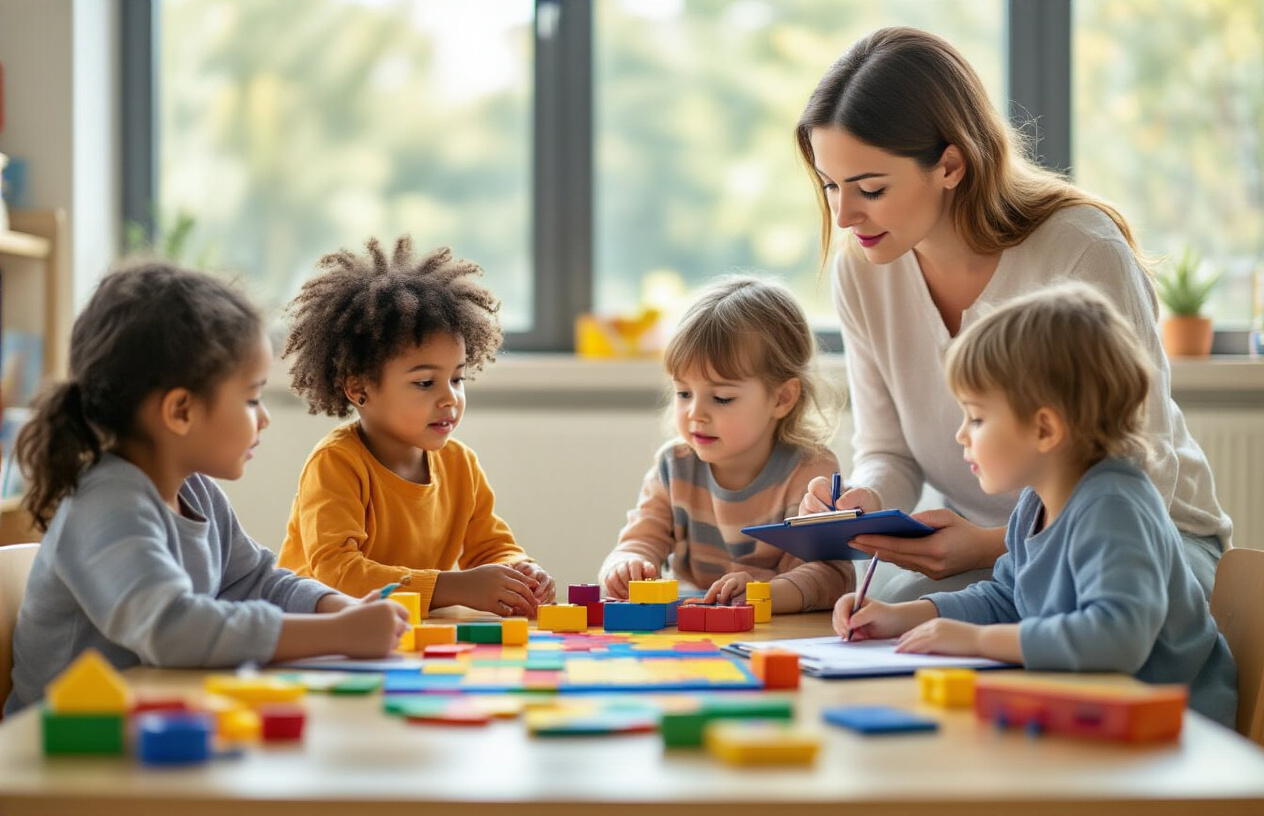
Understanding Developmental Milestones Through Play Observations
Early childhood development unfolds naturally through play, making observation a powerful tool for tracking children's growth. Educators trained in play-based learning benefits can spot critical developmental markers during everyday activities. When a child builds with blocks, professionals observe fine motor skills, spatial reasoning, and problem-solving abilities simultaneously.
Physical development becomes evident through playground activities. Running, climbing, and jumping reveal gross motor coordination, while drawing and puzzle-solving showcase fine motor progression. Cognitive growth appears through pretend play scenarios where children demonstrate abstract thinking, memory recall, and creative problem-solving.
Social-emotional milestones emerge during group activities. Sharing toys, taking turns, and resolving conflicts indicate emotional regulation and social awareness. Language development accelerates through storytelling, singing, and peer interactions, with vocabulary expansion happening organically.
Play school environments provide structured observation opportunities through documented play sessions. Educators record specific behaviors, noting when children achieve new skills or struggle with particular tasks. These observations create comprehensive developmental profiles that inform individualized learning approaches.
Professional assessment tools complement natural observation methods. Developmental checklists, portfolio documentation, and video recordings capture progress over time. This multi-faceted approach ensures accurate measuring of child development while maintaining the joy and spontaneity that make play-based learning effective.
Communication Strategies Between Parents and Educators
Strong partnerships between families and preschool education professionals create optimal learning outcomes. Regular communication channels keep everyone informed about children's progress, challenges, and achievements across different environments.
Daily communication logs provide immediate feedback about classroom experiences. Teachers share specific examples of learning moments, social interactions, and skill demonstrations. Parents contribute home observations, creating a complete picture of child development.
Scheduled conferences offer deeper discussions about developmental progress. Educators present portfolio evidence, assessment results, and observational data while parents share home experiences and concerns. These conversations align expectations and create consistent support strategies.
Digital platforms streamline communication between busy families and educators. Photo sharing, progress updates, and milestone celebrations happen in real-time. Parents stay connected to their child's play school experience even during work hours.
Collaborative goal-setting ensures everyone works toward common objectives. When teachers and parents identify specific developmental areas needing attention, they create coordinated approaches that reinforce learning across environments. This teamwork maximizes each child's potential while addressing individual needs promptly.
Identifying and Addressing Potential Learning Challenges Early
Age-appropriate learning activities reveal potential developmental concerns before they become significant obstacles. Early identification through play observations allows for timely interventions that support successful learning trajectories.
Warning signs often appear during structured play activities. Children who consistently avoid certain tasks, struggle with peer interactions, or show regression in previously mastered skills may need additional support. Experienced educators recognize these patterns and initiate appropriate responses.
Screening tools integrated into the preschool curriculum help identify specific learning differences. Simple assessments disguised as games evaluate language processing, motor coordination, attention span, and social skills. These evaluations happen naturally within play contexts, reducing anxiety for children.
Professional referrals connect families with specialists when concerns arise. Speech therapists, occupational therapists, and developmental pediatricians work collaboratively with preschool activities to create comprehensive support plans. Early intervention services often integrate seamlessly into play-based environments.
Supportive learning environment modifications accommodate diverse learning needs. Visual schedules, sensory breaks, and individualized instruction strategies help all children succeed. Teachers adapt activities to match different learning styles while maintaining inclusive classroom communities.
Documentation tracks intervention effectiveness over time. Progress monitoring ensures that support strategies produce positive outcomes. When approaches need adjustment, teams collaborate to find more effective solutions that honor each child's unique developmental path.

Play-based learning offers young children a natural pathway to develop essential skills while enjoying their educational journey. The combination of age-appropriate activities, carefully selected schools, and supportive home environments creates a powerful foundation for lifelong learning. When children engage in structured play, they build cognitive abilities, social skills, and emotional intelligence without the pressure often associated with traditional academic approaches.
Parents and educators who embrace play-based methodologies see remarkable results in children's overall development. The key lies in finding the right balance between guided activities and free exploration, while consistently tracking progress through observation and age-appropriate assessments. Start by researching play schools in your area that align with your child's personality and learning style, then extend these principles into daily home activities to create a seamless educational experience that nurtures curiosity and growth.
No comments:
Post a Comment